

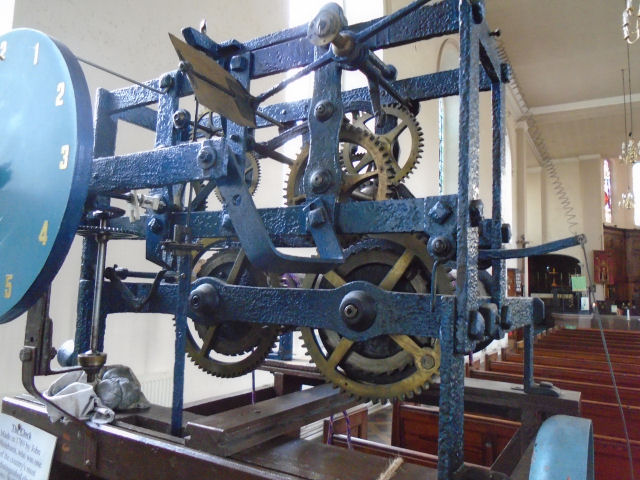
This chair frame clock is a classic example from the late 18th century. Its escapement uses the traditional recoil type, but with a clever twist: the arbor with the pallets can be shifted away from the escape wheel, disengaging it and allowing the movement to run freely until the hands are reset to the correct time. Interestingly, there’s no clutch involved. The striking train relies on an old peg-and-lever mechanism—a design so rare that it appeared in clockmaking for only a short period.
One remarkable surviving piece is the 1769 Whitehurst clock at St. Peter’s Church in Stockport. Crafted by John Whitehurst of Derby, it remains a historical treasure as both a working public clock and a fine example of craftsmanship. Today, the restored mechanism is proudly displayed in the church nave. While its function may have been adapted over time, recent conservation efforts—such as maintenance, cleaning, and the making of new clock hands and weights—help preserve both its beauty and its story for future generations.
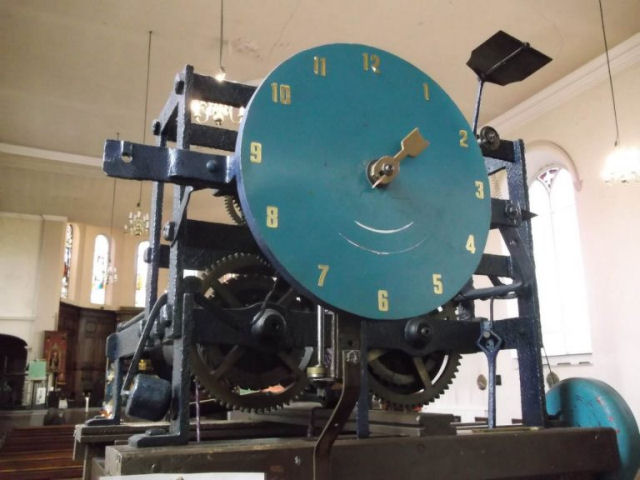

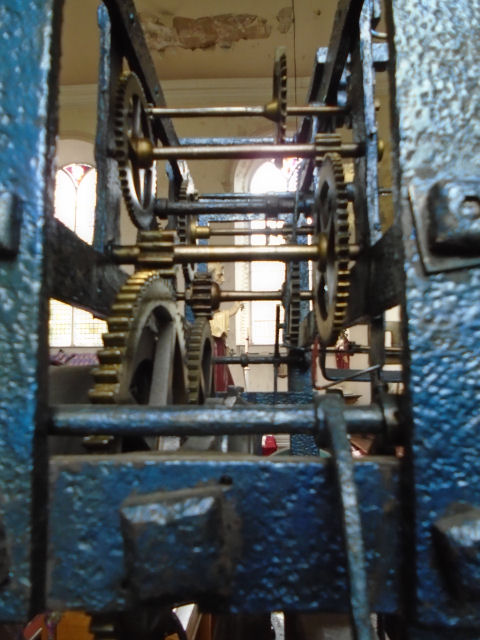

The Clock Mechanism
- Original Manufacturer: The clock was made by John Whitehurst (1713–1788) of Derby.
- Date: The mechanism was installed in 1769, shortly after the church opened.
- Status: The clock was restored to working order by Philip Quale and Alan Newton.
- Location: The restored clock is now displayed in the church nave.
Recent Maintenance
- Overhaul: The clock mechanism underwent an intensive cleaning, oiling, and overhaul during a recent project.
- Repairs: Parts were replaced as needed during the maintenance.
- Pendulum: The pendulum was removed, painted, and reinstalled by Ron Gregory.
- Weights: New weights were fabricated for the clock.
- Clock Hands: The original clock hands were replaced with new ones fabricated as part of the dial restoration project.
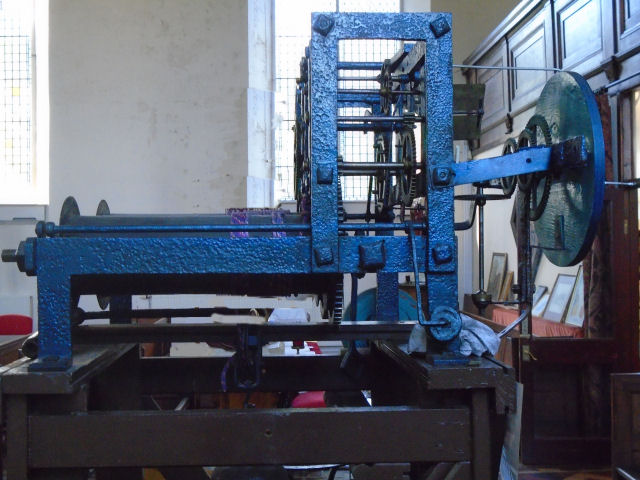
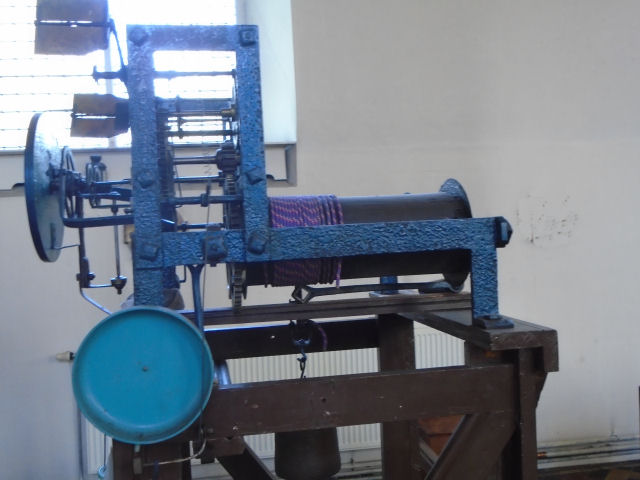

Published 20/09/2025